SPOTLIGHTED PODCAST ALERT (YOUR ARTICLE BEGINS A FEW INCHES DOWN)...
In my 35-plus years as a wrestling fan, I have witnessed many changes in professional wrestling. Some of these changes have been temporary, while others have become permanent. Some have been for the better, while others have been for the worse. One change that has been both permanent and undoubtedly positive, however, is the presentation of women in professional wrestling.
For the majority of my fandom, women in wrestling were largely relegated to roles that emphasized sex appeal. As an adolescent, the sex appeal of beautiful women on wrestling television was certainly appealing to me. Sunny, Sable, Torrie Wilson, and others were among the most desirable female celebrities of the era.
Over time, the number of women involved in wrestling expanded, but their position and purpose on the television show remained largely tertiary, which was limiting and, at times, degrading. To be honest, I never viewed the “Divas Era” as offensive. Instead, I saw it as an unnecessary interruption of the part of the show that actually interested me: the wrestling.
That all began to change in the 2010s, largely because of the presentation of women in NXT. The competition and ability of the women were emphasized, and that approach interested me as well as the larger wrestling audience. Eventually, WWE adopted the same philosophy on the main roster, and competitive women’s wrestling became increasingly embraced throughout the wrestling industry.
The 2010s brought a number of historic firsts for women in WWE, including the first women’s Royal Rumble, the first women’s Elimination Chamber match, and the first women’s WarGames match. Now, having reached a point where women are a central part of WWE television and PLE events, their prominence has become the norm rather than the exception.
In this week’s article, I’ll look at three important matches and moments in the evolution of women’s wrestling in WWE.
Then: Trish Status vs. Lita (WWE Raw: Dec. 6, 2004)
Prior to what became known as the Women’s Evolution, there were very few women’s feuds in WWE history that truly resonated with a significant portion of the fan base. There were even fewer moments involving women’s wrestling that stood out as historically significant. One match that has consistently been highlighted when tracing the history of women’s wrestling in WWE is the first—and, for a very long time, only—women’s main event in the history of Monday Night Raw. That match took place on December 6, 2004, when Lita challenged Trish Stratus for the WWE Women’s Championship.
The match is often referred to as a seminal moment, although it largely stands alone in the history of WWE at the time. The match itself is quite good, first and foremost because it is a great example of a beloved babyface challenging a hated heel for a championship. Both women play their roles well. Lita brings the energy and determination of the challenger, while Trish uses underhanded tactics, bending and sometimes outright breaking the rules to maintain control. A notable example comes when Trish uses her protective mask as a weapon to strike Lita and begin the heat segment of the match.
What separates this match from the vast majority of women’s matches at the time—and even from many matches involving women in the decade that followed—is its competitive tone and intensity. It does not feel like women performing a collection of wrestling spots. It feels like a fight. It feels like a contest. Most importantly, it feels like winning the match and winning the championship is the most important thing in the world to these two women at that moment.
For a match that runs under ten minutes, the women also manage to pack in plenty of memorable moments. Early in the match, Lita performs a dive through the ropes that is replayed multiple times, partially because of the awkward landing that leaves her neck and back bending in an almost pretzel-like fashion. They also deliver a top-rope superplex, which is commonplace in women’s wrestling today but was still very much an anomaly for a women’s match in 2004.
In the end, Lita wins the championship clean with her finishing move, creating a genuine crowning moment for her and a significant moment for women’s wrestling in WWE. Unfortunately, the match did not immediately lead to a broader change in how women’s wrestling was perceived or presented in WWE. It remained more of an isolated landmark than the beginning of a sustained transformation.
That does not diminish what the match accomplished. The quality of the action, the sense of urgency, the storytelling, and the competitive nature of the contest would allow this match to fit comfortably among high-level WWE main events involving either men or women in 2026. That is perhaps the most telling aspect of looking back at Lita and Trish’s 2004 Raw main event: more than twenty years later, the match still feels like a wrestling match rather than a historical curiosity.
Now: Becky Lynch vs. Sasha Banks vs. Bianca Belair (WWE Crown Jewell: Oct. 21, 2021)
In addition to the evolution of how women have been presented throughout WWE, the company’s shows in Saudi Arabia demonstrate another significant evolution in how women have been featured. When WWE first began running events in Saudi Arabia in 2018, women were largely absent from the shows or were featured in a less significant and somewhat downgraded fashion. Over time, however, that has changed. Today, when WWE runs shows in Saudi Arabia, the women are featured much more similarly to how they are presented on WWE’s other television shows and PLEs.
Perhaps the first time women were treated on an equal level—and arguably the best women’s match to take place in Saudi Arabia—came at Crown Jewel 2021, when Becky Lynch defended the SmackDown Women’s Championship against Bianca Belair and Sasha Banks in a Triple Threat Match. The women were still required to wear T-shirts over their ring gear, but that was essentially the only aspect of the match that felt different from what you would normally see at a WWE event. All three women came prepared to steal the show, putting on a highly competitive and extremely dramatic match.
ARTICLE CONTINUED BELOW…
Check out the latest episode of “Worse or Better” with Josh White, part of the PWTorch Dailycast line-up: CLICK HERE to stream (or search “pwtorch” on Spotify, Apple Podcasts, or any other iOS or Android app to subscribe free)
I am often critical of wrestling that feels overly complicated, particularly when it involves wrestlers with less experience, but in this case, the match was very complicated and creative while still being executed at a remarkably high level. All three women showcased the qualities that made them—and continue to make them—standout performers in professional wrestling. Sasha Banks displayed her creativity through the numerous reversals and counters throughout the match. Becky Lynch’s subtle character work, facial expressions, and technical proficiency were consistently on display. Perhaps most notably, Bianca Belair showcased her exceptional athleticism and strength at an extremely high level.
The pacing of the match was frantic when it needed to be, but the wrestlers also understood when to allow the action to breathe, particularly during the pivotal moments. It is also worth emphasizing the role of the Saudi crowd. By this point, it was becoming clear that the audience was no longer simply watching WWE as a novelty. They were becoming genuine members of the WWE fan base, with a clear investment in the characters and stories.
I especially like the heel finish to this match. After Bianca hits Becky with the KOD, Sasha attempts to dispose of Bianca so she can steal the pinfall. Bianca counters, but when she goes for the cover, Sasha interrupts her again. These repeated interruptions give Becky enough time to recover, counter Bianca with a cradle, and use the ropes for leverage to score the pinfall and escape with the championship.
It is a creative, well-executed heel finish that perfectly fits Becky’s character while giving all three women an opportunity to showcase their strengths. More importantly, the match serves as a strong example of how far WWE’s presentation of women in Saudi Arabia had already evolved—and how that evolution would continue in the years that followed.
Forever: Charlotte Flair vs. Becky Lynch (WWE Evolution: Oct. 28, 2018)
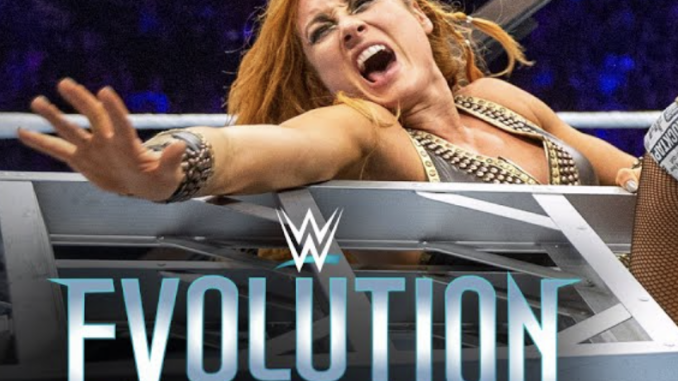
On October 28, 2018, WWE held Evolution, the first pay-per-view in company history to feature an exclusively women’s roster. The event featured women from Raw, SmackDown, NXT, NXT UK, and the Mae Young Classic, making it a significant milestone in the evolution of women’s wrestling in WWE. The penultimate match of the night featured one of the most intense rivalries in WWE at the time, as SmackDown Women’s Champion Becky Lynch defended her title against Charlotte Flair in a Last Woman Standing match. In many ways, you could argue that both Evolution as a whole and this match specifically signaled the end of the “evolution” of women’s wrestling in WWE. From this point forward, women’s wrestling was no longer something WWE was trying to establish as a legitimate part of the product. It simply became part of WWE.
It is also notable that, by this point, Becky Lynch had become arguably the hottest wrestler in WWE, regardless of gender. Even though the announcers and the presentation of her character still treated her as a heel, the audience was reacting to Lynch in a way that was reminiscent of the reaction to Stone Cold Steve Austin in the fall and winter of 1996 heading into 1997. The audience had essentially decided who its favorite was, regardless of how WWE was presenting the character.
The match itself was another clear indication of how far women’s wrestling had come. This was a long way removed from the bra-and-panties matches that had been a staple of WWE programming during the Divas Era. Instead, Lynch and Flair were competing in a Last Woman Standing match built around the same kind of weapons, big spots, physicality, and drama that audiences had come to expect from a major WWE main-event match involving men. The match was not perfect. Some of the setups took too long, and there was an awkward disconnect between Becky being presented as the heel while being so clearly embraced by the audience as the fan favorite. Still, the match and the reaction it received made it a notable moment in WWE history.
As the match progressed, the intensity continued to increase. The emphasis shifted away from simply exchanging moves and toward the physicality and competitive struggle of trying to keep the other woman down for a ten-count. That is where the significance of the match became most apparent. The audience had fully embraced Becky Lynch as its new top star, and WWE was beginning to have no choice but to acknowledge that reaction.
The closing sequence delivered exactly the kind of spectacle you would expect from a major WWE match. After Charlotte attempted to put Becky through a table with a moonsault, Lynch countered by powerbombing Flair through the table. The spot left Charlotte unable to answer the ten-count, giving Becky the victory and allowing her to retain the SmackDown Women’s Championship.
The match was every bit as intense as anything you would expect to see involving WWE’s top male performers, and the crowd reacted to it with the same passion and investment they would have shown for any major WWE star. That, more than anything, is what makes the match significant. Women’s wrestling was no longer being treated as a separate attraction or a novelty. It was simply WWE wrestling—and the audience was responding to it that way.