
SPOTLIGHTED PODCAST ALERT (YOUR ARTICLE BEGINS A FEW INCHES DOWN)...
As we enter mid August, the dog days of summer are upon us. No matter where you are in the United States—and in much of the world—the days are hot, often uncomfortably so. When the afternoon sun becomes too much to bear, there’s no better escape than retreating into an air-conditioned room and watching some professional wrestling.
For much of my youth, summer days were spent working or playing outside until the heat finally won. I always looked forward to Monday nights, dragging my exhausted—and often sunburned—body into the house to cool off and settle in for some Monday night wrestling. It became part of the rhythm of summer: endure the heat during the day, then unwind with a few hours of wrestling once the sun began to set.
In this week’s article, I’ll revisit three matches from summers past that have stayed with me throughout my years as a wrestling fan. Whether because of their quality, significance, or the memories attached to them, each represents the kind of television wrestling that made escaping the summer heat even more enjoyable.
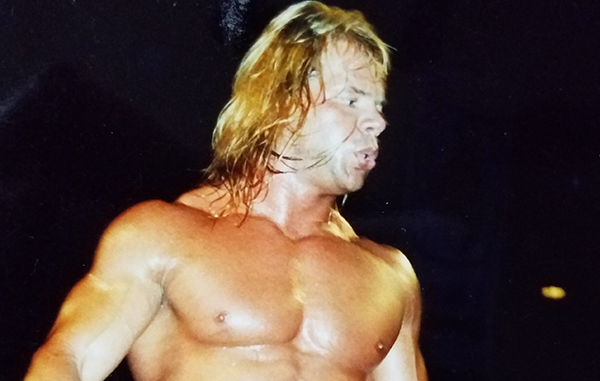
Then: Lex Luger vs. “Hollywood” Hogan (Monday Night Nitro)
It is crazy to consider how few Monday Nitro main events I actually remember, given that I watched virtually every episode during its run. I do remember a common formula, however. WCW would announce an appealing main event, and Tony Schiavone would hype it as the most important match in the history of professional wrestling. The match would last only a few minutes before ending in an nWo run-in. Nitro would then go off the air without a decisive winner as Schiavone enthusiastically urged viewers to tune in again next week.
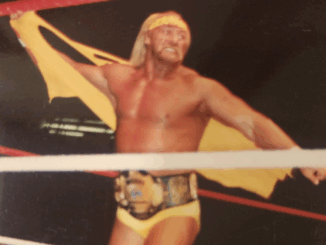
One notable exception—really more of a moment than a match—came on August 4, 1997. In addition to being the first three-hour edition of Nitro, it was also promoted as the 100th episode of WCW’s flagship program. The advertised main event featured a rare world title match on free television, with the long-reigning villainous champion Hollywood Hogan defending the WCW World Heavyweight Championship against the loyal standard-bearer of WCW, Lex Luger.
As usual, the announce team treated the match as the biggest television main event in wrestling history. Based on years of experience, though, I expected the typical inconclusive finish. This time, WCW delivered something completely different. The match itself is formula late-1990s Hogan. It is deliberate, methodical, and, frankly, pedestrian. Hogan controls almost the entire contest with his familiar heel offense.
Finally, Luger avoids the leg drop and lands a clothesline to ignite his comeback. Right on cue, the nWo storms the ring, and every fan watching assumes the match is about to end in another disqualification. Instead, something remarkable happens. Luger fights off Scott Hall, Kevin Nash, and Randy Savage. He hoists Hogan into the Torture Rack, and Hogan immediately submits. The arena explodes.
Fireworks fill the building as Luger is announced as the new WCW World Heavyweight Champion. The entire WCW locker room pours into the ring to celebrate. Luger was never known as an especially emotional performer, but on this night his joy feels completely genuine. The crowd’s excitement mirrors his own, creating one of the most memorable celebrations of the Monday Night War.
This wasn’t the greatest match of 1997. It wasn’t even close. But it produced one of the greatest moments. The title change only worked because WCW had conditioned its audience to expect the opposite. After months of interference, screwy finishes, and nWo dominance, fans had been trained to believe Hogan would escape once again. That predictability made the surprise feel authentic.
Sometimes making fans wait is what gives a payoff its power. Luger would lose the championship back to Hogan just five days later, but that hardly matters. The title reign was brief, yet the moment has endured for nearly three decades. It serves as a reminder that while technically brilliant matches are often celebrated by wrestling historians, sometimes an unforgettable moment—a genuine emotional release shared between the wrestlers and the audience—is what becomes truly timeless.
Now: Finn Balor vs. Roman Reigns (Raw, July 25, 2016)
For much of the 2010s, WWE felt stuck in a creative rut. Fans sensed it, and it was apparent that WWE management did as well. The company was searching for its next big hit—or at least something it could build momentum around. In the summer of 2016, WWE threw several ideas at the wall in an effort to generate excitement heading into SummerSlam. First, the company reintroduced the brand split with the WWE Draft. Second, it unveiled the new WWE Universal Championship, a world title exclusive to the Raw brand. To determine the inaugural challenger for the championship, WWE held a one-night tournament on Raw. The tournament began with two Fatal Four-Way matches, with the winners advancing to the night’s main event.
Fresh off a successful run as NXT Champion, Finn Bálor made his first appearance as a member of the Raw roster after being selected in the draft. He won his Fatal Four-Way match to advance to the main event against perennial headliner Roman Reigns. It was the first time Finn and Roman had ever shared a WWE ring, and their chemistry was immediate. Roman controlled the action with his size and power, while Finn answered with his trademark speed, timing, and agility. Every exchange felt crisp, and every move landed with purpose.
Although his “Tribal Chief” character was still years away, there are glimpses of it throughout the match. His confident mannerisms, constant trash talk, and controlled intensity all foreshadow the performer he would eventually become. The closing stretch is particularly revealing.
After one near fall, Roman sells genuine surprise. After the next, he flashes an arrogant smirk that barely conceals his growing frustration. As for Finn, it is remarkable how polished he was in 2016—and how little he has declined since. His precision, timing, and athleticism remain among the best in WWE nearly a decade later.
What makes this match truly memorable, however, is the finish. Like many fans, I fully expected Roman Reigns to win. The logical story seemed obvious: Finn would have an impressive showing, push Roman to his limit, establish himself as a future star, and ultimately come up short. Instead, WWE did the unexpected.As the saying goes, “Without expectation, there is no surprise.” You can actually see the surprise build inside the arena.
When Finn lands the Sling Blade, the crowd responds loudly. When he follows with the Shotgun Dropkick into the corner, the volume rises to another level. By the time he climbs to the top rope for the Coup de Grâce, much of the audience is already on its feet. The three-count triggers one of the biggest television reactions of the summer.
It wasn’t simply that Finn Bálor won. It was who he defeated and when he did it. On his very first night as a full-time member of the Raw roster, he cleanly defeated one of WWE’s most protected stars to earn a spot in the inaugural Universal Championship match at SummerSlam. Unfortunately, the story would be cut short when Bálor suffered a shoulder injury during his championship victory at SummerSlam and was forced to relinquish the title the very next night. Still, that doesn’t diminish this match. It remains one of the best examples of how instantly creating a new star can electrify an audience. For one night, WWE took a genuine risk, and the payoff was a moment that fans still remember nearly a decade later.
Forever: Bret Hart vs. 123 Kid (Raw, July 11, 1994)
In today’s wrestling landscape, it is difficult for even a great television match to remain memorable for very long. Modern wrestling moves at such a rapid pace that shocking turns, surprise returns, and viral moments often overshadow exceptional in-ring performances. That wasn’t always the case. Throughout the 1990s—and even much of the 2000s—a long, competitive television match featuring excellent wrestling and an electric crowd felt like a special attraction. One of the earliest examples came during the summer of 1994, when WWF Champion Bret Hart defended the title against the 1-2-3 Kid on Monday Night Raw.
What makes this match so memorable is that it wasn’t built around an elaborate storyline. Instead, the match itself became the story. It was a simple babyface-versus-babyface contest featuring an honorable champion and a determined underdog looking to prove he belonged.
Early in the match, the Kid surprises Bret by matching—and occasionally surpassing—him in technical wrestling exchanges. Frustrated, Bret begins wrestling with greater aggression to establish control. He pushes the boundaries of his normally composed demeanor without ever crossing the line into becoming a villain, preserving the integrity of his babyface character while adding an extra layer of intensity to the contest. Once Bret takes control, Sean Waltman delivers a masterclass in babyface selling. Few wrestlers have ever been better at “staying alive” during a heat segment.
Throughout the match, he repeatedly shakes his head and waves off defeat, visually communicating to the audience that he refuses to quit. He constantly struggles back to his knees and then to his feet, showing that although he has been battered, he is still fighting. These subtle details are often overlooked, but they are essential to great wrestling psychology. They keep the audience emotionally invested during the slower portions of the match and make them desperately anticipate the comeback. When that comeback finally arrives, it feels earned rather than inevitable.
The payoff comes in the closing minutes when the Kid unleashes a series of sharp, impactful kicks that shift the momentum. He strings together several believable near falls, each one drawing a louder reaction than the last. By this point, the crowd is absolutely molten, buying into the possibility that the young challenger might actually pull off one of the biggest upsets in WWF history. Ultimately, Bret counters a top-rope dropkick attempt, immediately applies the Sharpshooter, and forces the submission.
Both the storytelling and the in-ring execution were among the very best the industry had to offer at the time. Considering how rare lengthy, highly competitive television matches were on Raw in 1994, it’s easy to understand why this bout remains one of the defining television matches of the era. More than three decades later, Bret Hart and the 1-2-3 Kid still provide a blueprint for how to tell a compelling underdog story inside the ropes.
Leave a Reply
You must be logged in to post a comment.