
SPOTLIGHTED PODCAST ALERT (YOUR ARTICLE BEGINS A FEW INCHES DOWN)...
Theme: Face vs. Face
A constant source of debate and complaint in wrestling media over the last few months has been the growing number of matches and feuds involving two fan favorites verbally and physically sparring with one another.
The central argument in much of this debate is that these encounters often involve one or both wrestlers highlighting the weaknesses, hypocrisies, or character flaws of their opponent, leading fans to question whether they should cheer for a character at all — or at least how strongly they should support them.
Another common critique of face-versus-face matchups is that they force the audience to choose one beloved performer over another, sometimes creating apathy rather than emotional investment because fans feel conflicted about wanting either wrestler to lose.
Face-versus-face matches in WWE are not new. Perhaps the frequency has increased in recent years, but I would argue that these dynamics have historically risen and fallen depending on the roster composition and the booking philosophy of those in charge at the time.
Personally, I am not categorically against face-versus-face match-ups. While I believe the traditional heel-versus-face dynamic should remain the default structure in professional wrestling, I also think there is significant value in occasionally presenting two “good guys” against one another. In fact, some of the most famous and memorable matches in WWE history have involved two wrestlers who were both heavily supported by the audience.
So what separates a successful face-versus-face rivalry from one that leaves fans frustrated, disconnected, or less invested in the wrestlers involved? What makes the concept work?
First, the characters must be distinct from one another and remain consistent with themselves. If two wrestlers are too similar, the rivalry often becomes a zero-sum game in which the winner emerges elevated while the loser simply feels diminished. If the intention is to reposition one wrestler above the other, that may be acceptable, but the damage done to the losing wrestler is often harder to repair than the benefit gained by the winner.
Additionally, the behavior of each competitor throughout the feud must align with the traits they have consistently displayed over time. Sudden personality shifts or contradictions in motivation can create confusion that weakens the audience’s emotional connection to the character. Fans are willing to support arrogant, sarcastic, or even abrasive personalities. What audiences struggle to embrace are characters who feel inconsistent, directionless, or hypocritical.
Second, there must be a meaningful reason for the competition to exist. Face-versus-face feuds work best when there is a valuable prize or a clearly identifiable purpose driving the conflict. Most often, a championship fulfills this requirement. Without substantial stakes, the rivalry can quickly come across as unnecessarily petty or manufactured. In legitimate sports, fans regularly watch two beloved teams or athletes compete against one another in high-pressure playoff situations. As the stakes increase, audiences naturally accept greater aggression, intensity, and emotional volatility because the importance of victory justifies the behavior. Championship matches in professional wrestling create a similar atmosphere. The audience understands why two honorable competitors might temporarily place ambition above friendship or respect.
In this week’s article, I will examine three face-versus-face matches that I believe succeeded — rivalries that entertained audiences while simultaneously elevating or preserving the popularity of both competitors involved.
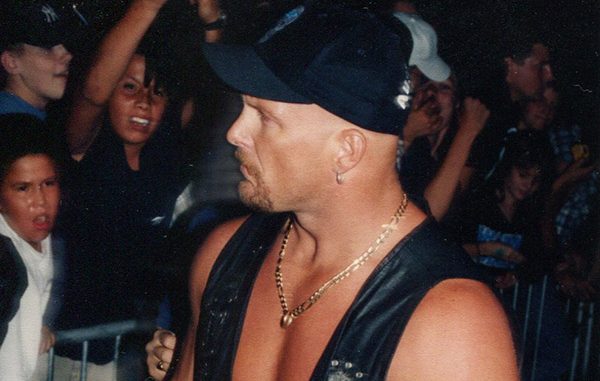
Then: Shawn Michaels vs. “Stone Cold” Steve Austin – King of the Ring ’97
In my fandom, one of the first times I can recall feeling a sense of conflicting loyalties accompanied by elevated interest was during the series of WWE Raw episodes in May and June of 1997. “Stone Cold” Steve Austin had quickly become my new favorite wrestler following his legendary match with Bret Hart at WrestleMania 13, where Austin emerged as a rebellious antihero despite losing the match. At the same time, Shawn Michaels had already been one of my favorites for years. After missing WrestleMania, Michaels returned in the spring and immediately resumed his rivalry with Bret Hart and the The Hart Foundation.
On the May 26, 1997 episode of Raw, Michaels and Austin teamed together against the Hart Foundation in a memorable tag team match that ended with them becoming WWF Tag Team Champions. Despite winning the titles, the two could barely coexist. Their interactions were defined by distrust, arrogance, and constant attempts to undermine one another. That tension eventually led to a match between the two at King of the Ring.
What made this rivalry fascinating was that neither man behaved like a traditional heroic babyface. Beyond their confidence and initiative, neither possessed many traditionally virtuous qualities. Instead, both were confrontational, aggressive, and openly critical of each other’s flaws. The tone of the feud was not built around friendly competition or mutual respect. There was no symbolic prize at stake and no larger moral issue driving the conflict. This was simply a battle between two alpha personalities who despised one another and wanted to prove superiority.
The match itself is a hidden gem. It features strong pacing, escalating aggression, and several moments that perfectly define both characters. It also serves as a snapshot of both wrestlers before injuries permanently altered their in-ring styles. Michaels was still performing before the back injury that shortened his initial run, while Austin was only months away from the neck injury that forced him to adapt his style for the remainder of his career. In many ways, this match captures both men in their athletic prime.
So why did this work?
The answer is that both characters were clearly defined and completely distinct from one another. More importantly, they consistently behaved in ways that aligned with what fans already loved about them. Their appeal was rooted more in vice than virtue, but those flaws were exactly what made them compelling.
Fans did not gravitate toward Steve Austin because he was kind or honorable. They connected with him because he was hot-tempered, unpredictable, and rebellious. Similarly, Shawn Michaels’ arrogance, vanity, and self-centeredness were essential parts of what made him such a captivating personality.
I would not argue that this dynamic works in every situation. Face vs. face rivalries can fail when the characters lack definition or when the audience cannot clearly distinguish the personalities involved. However, when both wrestlers are fully established, clearly unique, and committed to their characters, these rivalries can elevate both performers. Rather than weakening fan investment, they can intensify it by amplifying the traits that made audiences connect with each wrestler in the first place.
Now: Iyo Sky vs. Rhea Ripley – Evolution 2025
Two of the top five WWE matches of last year featured Iyo Sky and Rhea Ripley: the WrestleMania triple threat involving Sky, Ripley, and Bianca Belair, and the singles match between Iyo Sky and Rhea Ripley at WWE Evolution. Both matches centered around babyface competitors.
Leading into WrestleMania, Rhea displayed some less flattering aspects of her character, at times coming across as selfish and petty. Meanwhile, Iyo was presented as a more sympathetic and likable figure in the traditional babyface mold. Many fans, myself included, questioned whether the story heading into WrestleMania was damaging Rhea’s character. Instead, once the match concluded, it became clear that little to no damage had been done to Rhea’s popularity. In fact, by positioning Iyo as the sympathetic figure, WWE significantly increased the audience’s emotional investment in her.
By the summer of 2025, both Iyo and Rhea had developed into massively popular babyfaces with sustained crowd support. Their popularity earned them the main event spot at Evolution, where they competed for the Women’s World Championship. The central story going into the match was simple but effective: Rhea Ripley had never defeated Iyo Sky.
The match itself was outstanding—featuring crisp wrestling, innovative spots, and a compelling contrast in styles. Much like a playoff basketball game, the urgency, aggression, and competitive intensity reached an extreme level, even spilling outside the ring and into the crowd. Yet despite that intensity, neither competitor resorted to questionable tactics. Both wrestlers fought with desperation and aggression while still operating within the rules and without compromising their characters.
The conclusion saw a successful Money in the Bank cash-in steal the championship from both Iyo and Rhea. While the finish left unanswered the question of who the better wrestler truly was, it reinforced something equally important: both women had established themselves as the best performers in the division.
The rivalry between Iyo and Rhea succeeded because of the stakes involved and the quality of the wrestling itself. When winning and losing feel meaningful, fans are willing to accept moments of flawed judgment or emotional behavior as long as a character’s core identity remains intact. In this rivalry, competition drove the story. Rhea’s occasional lapses in character helped highlight Iyo’s strengths and sympathy. Most importantly, the rivalry demonstrated one of professional wrestling’s core truths: when fans see wrestlers push themselves to their absolute limits in pursuit of victory, respect and admiration naturally follow.
Forever: British Bulldog vs. Bret Hart – Summerslam 1992
Perhaps the most famous match in SummerSlam history—and the match that best illustrates the importance of the Intercontinental Championship—is the title bout between The British Bulldog and Bret Hart at SummerSlam 1992 in Wembley Stadium. The battle between the brothers-in-law remains a classic example of a successful babyface vs. babyface match.
The rivalry lacked an overt personal grudge. Instead, it was built on mutual admiration, subtle one-upmanship, and hints of jealousy. Pride and the pursuit of the Intercontinental Championship drove the conflict. By making the championship the centerpiece of both the rivalry and the match, WWE made the contest feel necessary and elevated the prestige of the title itself.
The match is also a masterclass in traditional professional wrestling psychology within a face vs. face framework. Without cheating or breaking the rules, Bret Hart subtly works in the heel role. He slows the pace, targets Bulldog with strikes, and grounds him on the mat to build sympathy for his opponent. Hart avoids obvious villainous tactics, yet still generates tension and heat without compromising his honorable persona. Feeding off the energy of the hometown crowd, Bulldog plays the classic underdog babyface fighting from underneath. Hart methodically controls the tempo, while Bulldog quickens the pace to ignite the audience and heighten the drama. Each wrestler fully commits to his role, and the crowd becomes completely invested in the outcome.
The success of the match is evident in its closing moments. Bulldog counters Hart’s sunset flip attempt by sitting down and hooking Hart’s legs for a sudden pinfall victory to capture the Intercontinental Championship. The Wembley crowd erupts in celebration. Hart rises to his feet and accepts defeat with grace, humility, and respect. In that moment, Bulldog reaches the highest peak of his career, while Hart preserves his babyface character and earns even greater admiration from fans.
The loss did not damage Bret Hart; if anything, it strengthened him on the path toward becoming WWF Champion just two months later. The match remains a prime example of how winning and losing can matter while still leaving both the victor and the defeated in a stronger position than before.

Leave a Reply
You must be logged in to post a comment.