
SPOTLIGHTED PODCAST ALERT (YOUR ARTICLE BEGINS A FEW INCHES DOWN)...
THEME: STARS ON THE RISE
One of the most compelling aspects of following professional wrestling is witnessing the development and journey of a rising talent. More specifically, there’s something uniquely satisfying about watching a wrestler build momentum week after week and climb the ranks. As a fan, you feel like you’re part of that journey. Whether it’s described as “going on a run,” “getting a push,” or “catching fire,” the question always lingers: will this star break through to the main event, or hit the proverbial glass ceiling and settle into the midcard?
Sometimes, that rise is driven by the creative team, who identify a wrestler’s potential and make a deliberate decision to elevate them. Other times, it’s the fans who generate a groundswell of support that forces management to take notice. The most effective ascents, however, occur when both forces align—when creative direction and audience investment reinforce each other. In those moments, the audience isn’t just watching the rise; they’re buying into it, fully engaged and eager for what comes next.
Timing also plays a critical role. Some wrestlers are presented as future stars from the moment they debut, positioned immediately as can’t-miss prospects. Others take a longer road—building a résumé, establishing credibility, and forming a connection with the audience over time. For those talents, it often takes a single match, promo, or defining moment to ignite their ascent and send them surging up the card.
Right now, much of the WWE audience’s attention is focused on Trick Williams, Oba Femi, and Jacob Fatu. Each represents a different version of a rising star, and each faces the same looming question: will they reach the top, or will their momentum stall before they get there? As always in wrestling, time—and audience reaction—will ultimately decide.
In this week’s column, I’ll highlight three notable stars whose journeys to the top took very different paths, but ultimately led to the same destination: the main event.
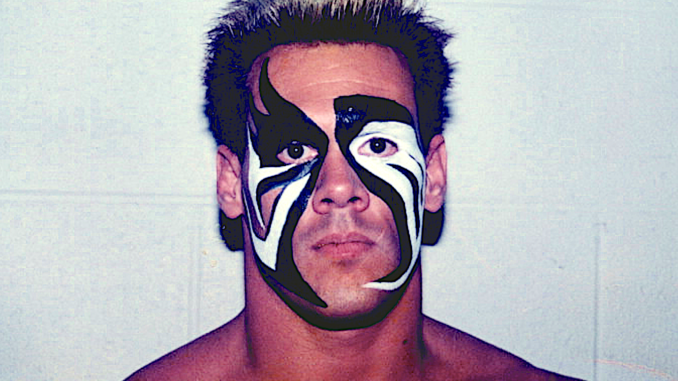
Then: Sting (1989-1990)
was too young to witness the rise of Sting in real time. By the time I began regularly watching World Championship Wrestling programming in 1994, Sting was already a made man—the established face of the company. When the WWE Network launched, one of the experiences I was most excited to revisit was Sting’s emergence between 1988 and 1989.
Before diving into that period, I already understood the importance of Ric Flair in Sting’s development. After watching the journey firsthand, however, I gained a greater appreciation for just how essential Flair truly was. In many respects, Flair functioned as Sting’s crutch during this period, giving the young star a framework to lean on while ascending the card. One of the key takeaways from watching their series of matches is that Sting was largely working within the structure of a traditional Ric Flair match. While Sting was still able to showcase some of the charisma and explosiveness that made him unique, many of his movements, mannerisms, and dramatic moments existed within a formula established and controlled by Flair.
When revisiting Sting’s rise, however, I wanted to highlight a match that demonstrated there was more to his ascent than simply working opposite Ric Flair. A less celebrated—but still highly important—match in establishing Sting as a credible main event talent was his bout against The Great Muta at The Great American Bash in 1989.
Without Flair guiding the structure of the match or limiting the action to a familiar Flair template, Sting was able to showcase many of the qualities that truly propelled him to the top of the card. Most notably, the match highlighted the natural babyface fire Sting possessed in abundance. Every time Sting mounted a comeback or showed defiance, the crowd erupted. Another underrated aspect of Sting’s performance was his ability to sell like a true babyface. He sold with determination rather than weakness, conveying struggle and exhaustion while still projecting resilience. Sting had a unique ability to generate sympathy from the audience without ever appearing pitiful.
Even though the finish against Muta was inconclusive, the match still succeeded in strengthening Sting’s credibility. More importantly, it revealed the core attributes that would ultimately carry him to the top of the company.
In retrospect, I am still unsure whether Sting’s rise was part of a carefully constructed long-term plan by the WCW booking committee or something that evolved organically because of his connection with the audience. Regardless of how it began, the result was the same: Sting cemented himself as the franchise player of World Championship Wrestling—a role and identity he carried throughout the remainder of his career.
Now: Becky Lynch 2018
Not every wrestling star is identified as a future main eventer from the outset. Sometimes the rise of a superstar happens gradually rather than explosively. Sometimes the journey consists of two steps forward and one step back. Sometimes momentum begins as a small spark before erupting into a wildfire. And sometimes the path to the top is filled with detours before finally finding the road that leads to stardom.
Becky Lynch was not handpicked to become the biggest star in wrestling. She did not possess the super-athlete background, glamorous presentation, larger-than-life personality, or industry pedigree often associated with top stars. For Becky, however, the story was never about what she started with—it was about what she created. What she created was a genuine connection with the audience.
After roughly three years on the main roster, Becky appeared stuck in the midcard. Despite her position on the card, however, the audience consistently reacted to her with a level of passion that exceeded her booking. The foundation for a major rise already existed; it simply needed the right moment to ignite it.
By 2018, Becky had all the ingredients necessary for a breakout run: a likable personality, solid in-ring ability, and—most importantly—a real emotional connection with the fans. What she lacked was the spark.
That spark arrived unexpectedly at SummerSlam in 2018. Ironically, the match itself is often forgotten. Becky challenged for the WWE Women’s Championship in a triple threat match against Charlotte Flair and Carmella. The defining moment came afterward, when Becky viciously attacked Charlotte. The angle was designed to generate boos and potentially elevate Becky as a heel. Instead, the audience reacted with overwhelming support and enthusiasm.
Much like the famous King of the Ring promo that launched Stone Cold Steve Austin into superstardom, wrestling history often simplifies Becky’s rise by pointing to this one moment as the instant she became a main event star. A closer examination tells a more nuanced story.
The SummerSlam attack started the fire, but it did not immediately become an inferno because WWE creative was initially hesitant to fully embrace the audience reaction. In the weeks and months that followed, Becky’s momentum was neither extinguished nor aggressively accelerated. Instead, Becky and the audience organically created additional moments that intensified her rise.
The most iconic example came in the buildup to Survivor Series, when Becky stood bloodied in the crowd after a backstage brawl, defiantly smiling as the audience rallied behind her. Moments like this poured gasoline onto the fire and transformed Becky’s momentum into something impossible to ignore.
By the end of 2018, Becky was not only “The Man” in name—she was the star in WWE. Arguably for the first time in company history, a female performer had become the most embraced and organically supported star in the promotion.
The rise of Becky Lynch remains one of the clearest examples of bottom-up momentum in modern wrestling: a movement initiated by the audience that eventually became impossible for management not to embrace.
Forever: Brock Lesnar 2002
The blueprint for introducing a wrestler with impact, establishing them as a credible competitor, and solidifying them as a main event champion can be found in the rise of Brock Lesnar. After his debut, Lesnar ascended the ranks without detour or delay, becoming the biggest star in the company in just six months—evolving from “The Next Big Thing” into the big thing.
Lesnar arrived on WWE Raw during a Hardcore Championship match, brutally dismantling Al Snow, Maven, and Spike Dudley with Paul Heyman by his side. Throughout the spring, he showcased unmatched physical dominance and ruthless aggression, most notably by destroying The Hardy Boyz, immediately establishing himself as a legitimate threat.
A key milestone in Lesnar’s ascent came during the King of the Ring tournament. He dominated the early rounds before facing fan favorite Rob Van Dam in the final. In that match, Lesnar demonstrated why he was the correct choice for a main event push. Even at this early stage, he displayed an advanced understanding of in-ring psychology—particularly in how he registered and sold offense relative to his size and presence.
Rather than no-selling, Lesnar absorbed offense in a way that enhanced both his opponent and his own aura. He knew when to be staggered and when to be taken off his feet, allowing the babyface to build momentum without compromising his dominance. The match, though only about five minutes long, felt like a competitive fight—an example of efficient storytelling that elevated both competitors.
Importantly, this is a skill Lesnar has retained throughout his career. Based on his run in WWE NXT, I would argue that Oba Femi possesses a similar, underrated ability to balance dominance with believable vulnerability.
Following his King of the Ring victory, Lesnar defeated The Rock at SummerSlam to win the WWE Championship. In short, his rise to the top took just six months.
Lesnar was not organically chosen by fans to be a main eventer—but he also wasn’t rejected. His presence, combined with the skill set he displayed in matches like the King of the Ring final, convinced audiences that he belonged. The push worked because it never felt like he was positioned beyond his capabilities.
Despite the many detours and evolutions his career has taken since 2002, Lesnar’s initial rise provided the jet fuel that sustained him as a main event attraction for decades.
WATCH HERE (Brock’s debut):
WATCH HERE (Brock vs. Rod Van Dam KOTR):
Leave a Reply
You must be logged in to post a comment.