
SPOTLIGHTED PODCAST ALERT (YOUR ARTICLE BEGINS A FEW INCHES DOWN)...
Theme: WWE at MSG
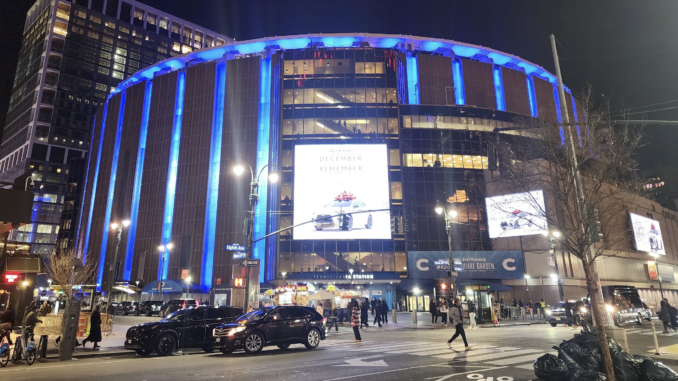
On July 18, WWE will present another edition of Saturday Night’s Main Event. While it is another installment of the revived series, this one should feel different. This edition emanates from Madison Square Garden.
The Garden has always held a special place in WWE history. Long before the company became a national – and eventually global – promotion, Madison Square Garden served as the home arena for Capitol Wrestling, the WWWF, and later the WWF. It was the company’s proving ground, where champions were crowned, legends were made, and many of professional wrestling’s most memorable moments unfolded.
Some of WWE’s biggest events have taken place under the bright lights of the Garden. The first WrestleMania, the inaugural SummerSlam, and numerous major pay-per-views and premium live events have all called Madison Square Garden home. Long before WWE reached a national television audience, the Garden hosted countless championship matches, heated rivalries, and unforgettable moments that helped shape the company’s identity.
Two sayings are often associated with New York City: “If you can make it here, you can make it anywhere,” and “Everything is bigger in New York.” Both sentiments apply to Madison Square Garden’s place in WWE. A match or moment that takes place at the Garden simply feels more significant. Throughout WWE history, the arena has served as both a proving ground for rising stars and a stage used to elevate the company’s biggest matches, storylines, and defining moments.
With Saturday Night’s Main Event returning to the World’s Most Famous Arena, this week’s article looks back at some of the greatest matches and most memorable moments in Madison Square Garden history.
Then: Hulk Hogan vs. Randy Savage (Madison Square Garden Trilogy, 1985-1986)
Hulk Hogan owned Madison Square Garden during the mid-to-late 1980s. Far and away the biggest star of the era, he was the driving force behind the WWF’s transformation into the “global leader in sports entertainment.” While my fandom and interest in Hogan have diminished over the years, my admiration for Randy Savage has only continued to grow.
Comparing Savage to the other top WWF stars of the era highlights what made him so unique. Hogan and the Ultimate Warrior were magnetic performers, but their appeals to the audience often felt overt and highly performative. Savage’s charisma was just as obvious, yet it never seemed contrived. Likewise, many of the era’s biggest names – Hogan, Warrior, Honky Tonk Man, Junkyard Dog, Ted DiBiase, and others – felt like living cartoons. Their characters were broad, exaggerated, and often predictable.
Savage certainly possessed a larger-than-life quality, but he never crossed the line into parody. He wasn’t a stereotype; he was an individual. His eccentricity felt authentic rather than manufactured.
Another quality I have come to appreciate is the way Savage wrestled above his physical size. Many of WWF’s top stars were noticeably larger than he was, yet Savage never felt undersized. He carried himself on the balls of his feet with his chest out and chin held high, projecting supreme confidence. Combined with his manic intensity and unmistakable personality, he seemed every bit as imposing as the true heavyweights around him.
During his first year in the WWF, Savage headlined Madison Square Garden three times against Hulk Hogan. WWE Vault recently released all three matches together in a single YouTube video, making for an entertaining look back at one of the company’s earliest marquee rivalries. One aspect of these Garden shows that I have always loved is their visual identity.
Within moments of watching a match, you instantly recognize Madison Square Garden. Yet, despite taking place across an entire decade, the venue appears remarkably unchanged. Whether the event occurred in 1980 or 1990, the familiar entrance, lighting, camera angles, and intimate atmosphere create a timeless presentation that immediately evokes classic WWF.
Watching the trilogy reveals much about what made both the era and its performers so special. In every match, the crowd is overwhelmingly behind Hogan. Every burst of offense sends the arena into a frenzy. To Hogan’s credit, that response was anything but accidental.
Hogan guided the audience through every rise and fall of the match like an orchestral conductor, using exaggerated facial expressions, body language, and impeccable timing to maximize every reaction. The standout moment of the series comes when Hogan playfully steals Savage’s trademark sunglasses, puts them on, and mockingly beats him up. The Garden absolutely erupts.
Savage, meanwhile, is a whirlwind of perpetual motion. His frantic pace, relentless aggression, and nonstop offense make him the perfect opponent for Hogan. Rather than allowing the champion to slow the pace by lying on the mat between exchanges, Savage constantly keeps the action moving forward. That approach is especially important because Hogan was significantly larger than Savage – a rarity among Hogan’s major opponents during this period. Savage’s viciousness is also on full display, particularly in the first two matches, where he repeatedly attacks Hogan with the championship belt, creating sympathy for the much larger champion while establishing himself as a desperate and dangerous challenger.
Viewed together, these three Madison Square Garden main events serve as a fascinating precursor to the Mega Powers saga and their legendary WrestleMania V showdown. They capture the magic of Hulk Hogan at the height of Hulkamania, the brilliance of Randy Savage as one of wrestling’s most distinctive performers, and the unique atmosphere that made a 1980s WWF main event at Madison Square Garden feel like the center of the wrestling universe.
Now: Seth Rollins vs. CM Punk (Raw, March 10, 2025)
Madison Square Garden is the perfect setting for a main event steel cage match between two top stars locked in a bitter blood feud. On March 10, 2025, that is exactly what WWE delivered. Seth Rollins and CM Punk had been at odds for months leading into their showdown on Raw, and their clash inside the cage not only advanced their rivalry but also introduced another major source of animosity that would ultimately shape the WrestleMania main event.
The tone of the match is established immediately. As soon as the cage door closes, Rollins and Punk abandon any pretense of caution and begin throwing punches.
The first major shift in momentum comes when Rollins powerbombs Punk into the steel cage, using the unforgiving environment to establish control. Punk answers moments later by countering another attempted powerbomb into the cage with a hurricanrana, sending Rollins headfirst into the steel and evening the score. The sequence is simple but effective, with each transition feeling like a logical escalation of the violence.
As the match progresses, every aspect of the action reflects the hatred between the two competitors and the purpose of the steel cage stipulation. Neither man seems interested in escaping the cage or even scoring a quick pinfall. Their objective is to punish one another.
The bout is WWE’s main event style at its best, steadily building drama through signature maneuvers, submission holds, counters, and near falls while allowing the Madison Square Garden crowd to become increasingly invested with each passing minute.
This style of match has become one of Seth Rollins’ greatest strengths. Regardless of opinions about his various character portrayals over the years, his ability to structure and execute a compelling main event match has been among the very best in WWE for nearly a decade. CM Punk, meanwhile, thrives when fueled by personal animosity and a passionate audience. In Madison Square Garden against Rollins, he had both, and his intensity elevated every exchange.
The finish serves a purpose far greater than simply determining a winner. As Rollins stands in the corner glaring at Punk with anger in his eyes, Roman Reigns suddenly appears and drags Rollins out of the cage before launching a vicious assault. Rollins is awarded the victory by virtue of escaping the cage, but the result is almost incidental. The real story is Reigns’ return and the violent statement he makes.
After laying out Rollins, Reigns turns toward the ring and sees Paul Heyman consoling CM Punk. The expression on Reigns’s face perfectly conveys anger, betrayal, and bewilderment as he processes what he is witnessing. Without a single word, WWE establishes the emotional foundation for the WrestleMania main event.
The March 10, 2025, steel cage match between Seth Rollins and CM Punk succeeds on multiple levels. It is an intense and well-structured cage match that rewards the audience with escalating action, while its conclusion seamlessly launches the next chapter of one of WWE’s biggest stories.
Madison Square Garden provided the ideal backdrop for such a pivotal moment. Few arenas possess the atmosphere or history necessary to make a major angle feel even larger than life, and on this night the Garden once again lived up to its reputation as one of professional wrestling’s most iconic stages.
Forever: Hunter Hearst Hemsley vs. Cactus Jack (Raw, Sept. 22, 1997)
The Sept. 22, 1997, edition of Monday Night Raw is historic for several reasons. It marked the first episode of Raw ever held at Madison Square Garden, the first time “Stone Cold” Steve Austin delivered the Stunner to Vince McMahon, and the WWE debut of Mick Foley’s alter ego, Cactus Jack.
Among those landmark moments, the Falls Count Anywhere match between Hunter Hearst Helmsley and Cactus Jack stands out as one of the show’s defining attractions. It took place during a period of tremendous momentum for the emerging WWF Attitude Era, at a pivotal stage in the evolution of both performers. It also served as the first of two unforgettable Madison Square Garden battles between Foley and Triple H, the second being their legendary Street Fight at the Royal Rumble 2000.
As the fall of 1997 began, Hunter Hearst Helmsley was shedding the aristocratic “Connecticut blue blood” persona that had defined his early WWF career. After winning the King of the Ring that summer and aligning himself with Chyna, he was becoming more aggressive, crude, and irreverent – the early version of the Triple H character that would soon dominate the company.
Meanwhile, Mick Foley had spent the summer alternating between the deranged Mankind and the lighthearted Dude Love. For the first Raw from Madison Square Garden, a Falls Count Anywhere match between Dude Love and Hunter Hearst Helmsley was advertised. The Garden crowd didn’t get Dude Love – they got something even better.
Before the match, a pre-recorded segment aired on the TitanTron featuring all Three Faces of Foley interacting with one another. Today, digital effects make this type of sequence commonplace, but in 1997 it was remarkably creative and technically impressive.
The segment culminated with Mankind and Dude Love introducing Cactus Jack as Dude’s replacement. Just as important as Foley’s performance was Helmsley’s reaction. While the thunderous response inside Madison Square Garden showed that the live audience understood the significance of Cactus Jack’s return, many viewers watching at home may not have.
Helmsley’s fear-induced tantrum upon hearing the announcement immediately communicated that this was not simply another version of Mick Foley – it was someone to be feared. It was an excellent piece of storytelling that helped every viewer understand the importance of the moment.
The match itself is an outstanding hardcore television main event. It fits comfortably within the time constraints of Raw while still delivering enough violence, creativity, and drama to leave a lasting impression.
Cactus Jack overwhelms Helmsley from the opening bell, using the ringside environment as a weapon and immediately distinguishing himself from Foley’s other personalities. To his credit, Helmsley perfectly portrays a man who is in over his head, desperately trying—and repeatedly failing—to escape Jack’s relentless assault.
One of the qualities that has always separated Mick Foley’s best hardcore matches from lesser examples of “garbage wrestling” is that every weapon shot and every dangerous bump serves the story rather than existing simply for shock value. This match is an excellent example. Cactus misses a diving elbow from the second rope to the floor, crashing through a trash can. The spectacular miss gives Helmsley the opening he needs to seize control and begin the heat. During that stretch, Helmsley displays flashes of the vicious, calculating competitor he would fully become by 1999.
The closing sequence is especially memorable. The fight spills up the entrance ramp into the seating area, where Helmsley introduces a table and prepares to deliver a Pedigree through it. Instead, Cactus counters, spikes Helmsley with a piledriver through the table, and scores the victory to a thunderous ovation from the Madison Square Garden crowd.
The Sept. 22, 1997, match between Cactus Jack and Hunter Hearst Helmsley remains memorable for multiple reasons. It represents a crucial chapter in the evolution of both men, showcasing Helmsley’s transformation into Triple H while reintroducing Cactus Jack to WWF audiences in spectacular fashion. It also foreshadowed the even greater war they would wage inside the same building at the Royal Rumble in 2000. Finally, the Madison Square Garden setting elevated the match even further.
The knowledgeable New York crowd instantly embraced Cactus Jack, transforming what could have been an entertaining Falls Count Anywhere television match into one of the defining moments of the Attitude Era. More than just a memorable bout, it symbolized the WWF’s changing identity as it embraced a grittier, more unpredictable future.
Leave a Reply
You must be logged in to post a comment.