
SPOTLIGHTED PODCAST ALERT (YOUR ARTICLE BEGINS A FEW INCHES DOWN)...
For decades, it’s has been a tried and true method for getting a younger star over. Get a group together, put the main star there and one from an older generation, and pair them up with younger talents to help that younger group gain experience directly from those who are seen as legends, all while gaining credibility in the fans’ eyes just by association with the bigger star.
Right now we have The Judgment Day and Solo Sikoa’s branch of The Bloodline looking like they are transitioning to something different, while a new group was designed to get Bron Breakker and Bronson Reed to their next level, which are what inspired this list of the Top Five (plus one honorable mention) Factions in Wrestling History.
The Dangerous Alliance
This one is my honorable mention and is a fan pick. It was an undervalued era of WCW, but there were tremendous stars having incredible matches. The talent in this faction was legendary. It was put together by Paul E Dangerously, now known as Paul Heyman, and has a tremendous track record when it comes to his influence in professional wrestling. At that time, he was a mid-level manager heralded by the hardcore fans of that era and was moving from tag teams to having a full on faction.
Paul’s faction was built around a new star coming to WCW from a hot heel run in the WWF. That star was “Ravishing” Rick Rude. This was a big deal for WCW to have a name like Rude joining their ranks, as there was a huge heel loss when Ric Flair left the promotion. Arn Anderson, Larry Zbyszko, and Bobby Eaton were all known names to fans that added credibility to this group and were able to chase undercard and tag team championships.
Madusa (a/k/a Aludra Blaze) brought a female component to the group adding beauty and elegance, but was the Sherri Martel of WCW, a woman tough enough to take her shots at the men as well as receive a few shots (it was a different era). There was virtually no women’s wrestling scene in North America at the time, so this was her best use at the time. Lastly, there was a new up and comer that Paul saw something in named “Stunning” Steven Austin. Now to the actual top five.
Evolution
The perfect faction setup in many ways. Triple H was the main guy the company was going with in this period. The problem in making your top star a heel is that he can be too dominant if not having a group around him making the advantage lean Triple H’s way. So they added a legend in Ric Flair as a mentor, and he was the perfect legend for them to pair with as they made a point of showing off their lavish lifestyles.
The importance of this faction. though. was getting over the young talent. Randy Orton was, as JBL used to say, what a professional wrestler (well, he said “sports entertainer,” but that’s cringe-inducing) you created would look like. Not only did Randy look the part, but he was part of a family legacy over three generations and came in with more experience when it came to connections and business psychology than many tenured wrestlers in the same locker room.
Along with many gifted blue chip athletes comes immaturity issues, and Randy is pretty quick to tell you now that he was the rule, not an exception. Randy needed veteran mentoring, and had that in Triple H and Ric Flair. Those same two veterans were able to bring along Dave Batista.
Coming into professional wrestling later in years than most, Batista didn’t have the immaturity issues of younger rising stars, but he lacked the years of work in the ring he didn’t have in his younger years before finding himself as a pro wrestler. He was able to learn psychology, timing, and how to handle your character, be it in front of crowds, behind the scenes, or in media interviews.
ARTICLE CONTINUED BELOW…
Check out the latest episode of “PWTorch ’90s Pastcast” with Patrick Moynahan and Alex McDonald, part of the PWTorch Dailycast line-up: CLICK HERE to stream (or search “wade keller” on Spotify, Apple Podcasts, or any other iOS or Android app to subscribe free)
D-Generation X
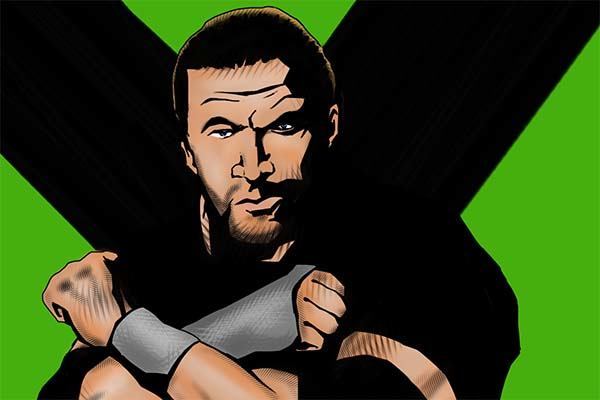
The term “Suck It!” – while pointing towards your crotch, acceptable in both a double axe chop pose or the advanced “X” by crossing arms slightly over the pelvis, to the dismay of many teachers, parents, and I even saw a Sunday School teacher get the ol’ crotch chop once – was mainstreamed into culture thanks to one group of wrestlers.
Shawn Michaels and Triple H teamed with Chyna and the all-too-underrated Rick Rude to form a group that was there to be visibly outrageous. Their language and innuendos upset bosses, but they had power in Chyna and Rude (and potentially backstage) to make sure no one stopped them.
That same attitude was used to become the brand of the federation during its second peak. They became trendsetters, where more people would try the same outrageous tactics, either feeling like retread ground or without the same charm that made it work naturally for DX. After being a group for Michaels to shine in, it changed when Michaels took an extended leave from pro wrestling.
The faction kept Triple H and Chyna, while adding a returning Sean Waltman hot off his run in the NWO, being rechristened to X-Pac as well as the hot new tag team of The New Age Outlaws (B.G. James & Billy Gunn). They carried the edginess with them, while adding new characters that became bigger stars.
No one benefited more than the current COO, as this was his chance to shine as a main event wrestler. By the time the faction dissolved, you had Triple H ready to carry the WWE Championship, X-Pac as a legitimate gatekeeper, a Playboy cover model and inspiration for a generation of girl wrestling fans, and a Hall of Fame tag team.
The Bloodline
The ’80s boom was pretty easy to figure out. It was Hulk Hogan who made business take off. In the ’90s, “Stone Cold” Steve Austin was the reason, and The Rock doubled the top draw depth in the middle of a hot run. It’s not as simple to say why wrestling’s third modern boom is happening. I think it’s a few things. You have Cody’s return, C.M. Punk freezing Hell, and Logan Paul and Bad Bunny bringing quite the audience with them, leaving their stamp of approval on how cool the product is because of their involvement. I think all of those are valid, but the storytelling that has been The Bloodline saga cannot be discounted in their contribution.
The Bloodline Era was the era I was most checked out on. I was sick of Brock Lesnar on top and Vince McMahon’s vision. When Brock won the Money in the Bank was where I took a break. I came back to watch the first WWE Smackdown on Fox, and the way that Kofi Kingston was squashed made me decide I needed more video game time and I left wrestling behind other than Royal Rumble, WrestleMania, and YouTube news.
That said, I missed the start of the angle in real time. I’ve gone back and watched the entire saga on the WWE YouTube channel, which is an awesome way one can catch up on an angle now. The establishment of Roman Reigns as the main respected member of the family, how he brought in his cousins, the ways it furthered his power as the video game boss holding the WWE Championship, then holding both major championships, and especially Paul Heyman’s involvement were all fantastic.
I left not thinking much of Reigns, because he was the force-fed babyface who was too close to a John Cena 2.0 for me to sit through another era if my kids weren’t into it once Cena left. But Roman the heel? Vince McMahon was really going to push a heel as his top act?
WWE has been a babyface-centric territory since its inception with few exceptions of long term heel top stars. The switch in character worked. This angle set up adding Sami Zayn brilliantly. Jey Uso became a bigger star in how he left the group as well as getting a pin on his cousin Roman. Solo Sikoa has an opportunity after the splintering of The Bloodline to become a mob boss character, and creating a faction of his own. Plus, that splinter story has used Jacob Fatu well in creating a massive main event career with great things to come.
New World Order
The NWO was the angle that changed wrestling forever. Hulk Hogan’s heel turn was already the biggest heel turn in history (see here for that and the other four (TOP FIVE LIST: The Top Heel Turns of All Time), and that was just chapter two of the story! Finding out each week who was coming into WCW through signing with the NWO or who would defect to the dark side was a weekly reason you’d tune in for a period of time.
Eventually, the faction did get watered down. It added too many members that weren’t focused on, but were obviously there to take the J.J. Dillon position in a War Games match, where someone has to take the fall for the heel team. We also forget though, it was in that crop that Scott Steiner, Buff Bagwell, and Konnan became bigger stars. It also created its heroes in Sting, Diamond Dallas Page, and Bill Goldberg. We had splinter factions like The Wolfpack and the Latino World Order as well, helping stars have an identity and a reason to get some TV time. Even in 2025, the LWO is still around in a different way, and the original black and white NWO t-shirt is still a top seller in wrestling shirts.
The Four Horsemen
There’s the one everyone looks to as the original. It doesn’t matter how big Kendrick Lamar or Eminem ever got, they’ll never have the respect of Tupac and Biggie. You bow the head to the legends that came before because you’re building on their legacy.
There’s a reason that Ric Flair survived in a world of cancel culture. He’s a legend. There will never be another quite like him. His ring work when starting against Ricky Steamboat was the evolution of that period. If you started watching today, his moveset may be limited and even repetitive from match to match. For that era, you had to be a champion in every territory, with whoever was on top in that territory. Although an overused term, Ric Flair “could have a good match with anyone.”
Then the way he was on the mic, building anticipation and selling tickets, is still unmatched as a heel promo. The way Flair carried himself made you believe. All of this credibility was strengthened the night that three other men joined him in attacking the beloved Dusty Rhodes.
The group of Flair, Arn Anderson, Tully Blanchard, and Ole Anderson were later interviewed as a group where it was Arn that called themselves The Four Horsemen of the Apocalypse. That name hit hard in the ’80s in the dying days of the Satanic Panic, and using that biblical imagery stuck. There were so many legendary matches and stars made, and the War Games match was created for taking down the Four Horsemen faction.
The group has come back a few times, and is the only group I can think of that’s ever pulled off a successful restart of the group. The next formation of the group that added Barry Windham when Ole Anderson left was considered by many, including myself, to be the best version of the group. I even loved the ’90s revival when it was Brian Pillman and Chris Benoit with Flair and Arn, and have a soft spot for the version with both Benoit and Dean Malenko, my two favorite WCW wrestlers being associated with The Horsemen was an incredible personal moment for me.
Leave a Reply
You must be logged in to post a comment.