
SPOTLIGHTED PODCAST ALERT (YOUR ARTICLE BEGINS A FEW INCHES DOWN)...
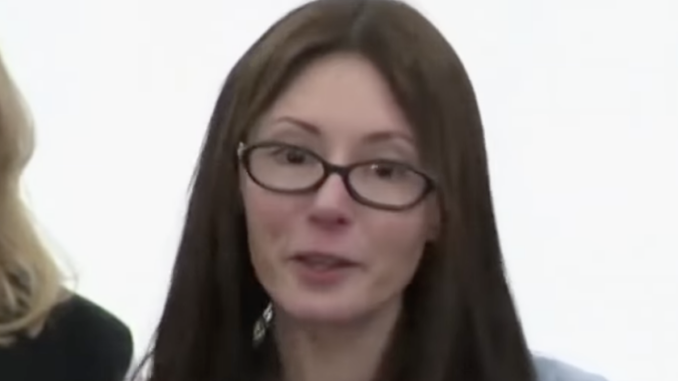
When Janel Grant addressed lawmakers at the Connecticut Capitol last Thursday, it marked the first time she had spoken publicly about her experience since filing a federal lawsuit against Vince McMahon, former WWE executive John Laurinaitis, and WWE. A video of Grant’s full remarks is publicly available via Connecticut Network (CT-N).
Grant opened her remarks by stating that she was alive “by a series of miracles,” before explaining how her life changed in June 2022 when she was named in a Wall Street Journal report related to a non-disclosure agreement. She said she received advance notice that the story was about to be published while she was attending a meeting at a new job and was instructed that she could not comment publicly, acknowledge the situation, or even say she was not okay.
Grant said the sudden loss of control over her own narrative had severe consequences. She described blacking out, attempting to take her life, and surviving only after someone intervened. She also stated that she left her home only ten times over the course of the following year, citing fear and safety concerns.
Throughout her speech, Grant emphasized that her experience was shaped not only by individual conduct, but by the use of non-disclosure agreements, which she described as tools that can prevent patterns of harmful behavior from being identified.
“Workplace safety depends on transparency,” Grant said, adding that when employees cannot speak, patterns cannot be seen, addressed, or stopped. She argued that when NDAs are used to conceal dangerous behavior, harm is not resolved but instead shifted to others.
Grant said this dynamic extended beyond private agreements and into public framing. She stated that she was asked by the company to participate in a joint statement describing her relationship with McMahon as consensual, which she refused. She later said that a company spokesperson characterized the relationship as consensual in a subsequent Wall Street Journal report without her input.
Grant also referenced the public handling of her lawsuit after it was filed in federal court in Connecticut. The filing itself names McMahon, Laurinaitis, and WWE, and references Brock Lesnar 44 times.
Two days after the lawsuit was filed, Paul “Triple H” Levesque was asked during the 2024 Royal Rumble media scrum by The Ringer’s Cameron Hawkins what steps WWE takes to protect talent. “I’ll give you the most generalized answer I can: everything possible,” Levesque responded. No additional policies or safeguards were outlined at that time.
Grant argued that public statements and on-screen messaging can function as forms of narrative control, particularly when they occur while individuals involved are unable to speak freely. She said that during the summer of 2024, reporters and viewers noted similarities between a prolonged wrestling storyline and elements of her real-life experience, which she cited as an example of how unresolved harm can intersect with televised narratives.
Grant stated that her lawsuit is not an employment dispute, but is connected to broader federal scrutiny. She said she cooperated with investigations by the Department of Justice and the Securities and Exchange Commission, preserved evidence, and remained silent at the request of federal authorities while criminal investigations proceeded. During that time, she said she spent six figures on legal and medical care.
While institutions continued operating, restructuring, and merging, Grant said her life became increasingly isolated. She described a disparity between institutional continuity and individual consequence that, in her view, remains unaddressed.
When discussing leadership, Grant did not focus on punishment, but on responsibility. She said leadership requires a willingness to engage with uncomfortable realities rather than isolating harm to a single individual and moving forward without examining underlying systems.
Her remarks came amid ongoing changes at WWE and its parent company, TKO. McMahon stepped away from WWE in 2022 following revelations related to hush-money payments, returned to the company, and then exited again in early 2024 after Grant filed her lawsuit alleging sexual assault, trafficking, and the coercive use of NDAs.
Grant said leadership changes alone do not necessarily address cultural issues. She spoke about people she cares deeply about who are still “living and working in fear” at WWE’s headquarters in Stamford, Conn. She attributed that fear not to a single person, but to workplace culture and structures that she believes have remained intact.
“No one should be required to trade silence for accountability,” Grant said.
Grant concluded her remarks by encouraging continued dialogue and engagement. She said this was only the second time she had spoken publicly about her experience, with the first audience being federal investigators.
Her speech adds to ongoing questions about transparency, accountability, and workplace safety within professional wrestling, particularly regarding how power is exercised and how silence is enforced. While legal proceedings continue, Grant’s public testimony provides additional context for how these systems operate and how their effects extend beyond individual cases.
TIMELINE OF PWTORCH ARTICLES ON THIS STORY:
John Cena says he still loves Vince McMahon, acknowledges people will be angry with him (4-18-2025)


Leave a Reply
You must be logged in to post a comment.